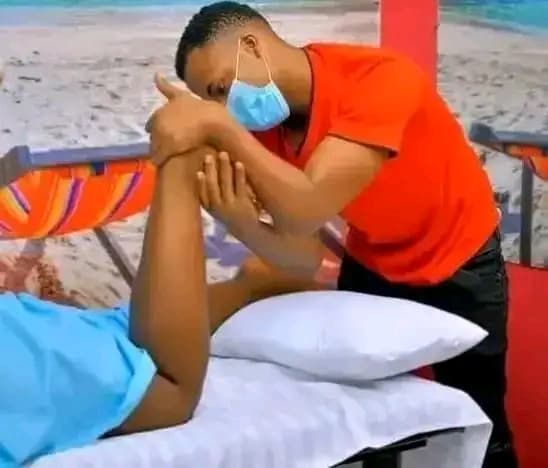
"Masseuse" is one of the most searched, most misunderstood words in the wellness world. It originally meant simply "a woman who gives massage" — but the term has aged, narrowed, and picked up baggage. Here is the honest picture.
Key takeaways
- Masseuse is a French-derived word for a woman who practises massage; masseur is the male form.
- Massage therapist is the modern, gender-neutral term that signals formal training and, in many countries, a licence.
- In regulated markets the word "masseuse" is fading because it carries no legal weight and has picked up non-professional connotations.
- In Uganda there is no state massage licence yet, so the title alone tells you nothing — verification and how you book matter far more than the word used.
- Safe booking means an ID-verified practitioner, payment held in escrow, and a safe-arrival check — never mobile money sent upfront to a stranger.
- Expect roughly UGX 80,000–250,000 for a professional full-body session in Kampala, depending on area, duration and practitioner.
So what is the difference between a masseuse and a massage therapist? A "masseuse" is, by dictionary definition, a woman who performs massage, and "masseur" is the male equivalent — both are older French terms that describe gender, not qualifications. A "massage therapist" is the current, gender-neutral professional title that implies formal training and, where regulation exists, a licence. In everyday Ugandan use the words overlap, so what protects you is not the label but whether the practitioner is verified and how safely you pay and meet.
What does "masseuse" actually mean?
The word entered English from French in the late nineteenth century, as European hands-on techniques were formalised by physicians such as Johann Mezger. In French grammar, occupation words carry gender: masseur for a man, masseuse for a woman. So at its root, "masseuse" says nothing about skill, ethics or training — it only tells you the practitioner is a woman who gives massage. That is the entire literal meaning, and it is where much of the modern confusion begins.
Masseuse vs massage therapist: the real difference in the title
Over the last few decades the profession in regulated countries rebranded around the phrase massage therapist (or Licensed/Registered Massage Therapist). There are three practical reasons the newer term won out:
- It is gender-neutral. One word covers everyone, instead of forcing a masseur/masseuse split.
- It signals training. "Therapist" implies study of anatomy, physiology and technique rather than a memorised routine.
- It carries professional weight. In places with licensing, "therapist" maps to a credential; "masseuse" and "masseur" legally mean nothing.
This is why many practitioners today gently correct the word "masseuse" — not out of vanity, but because it has, in some markets, drifted toward non-therapeutic or unclear-boundary services. The title clean-up is really a boundary clean-up.
Masseur, masseuse and therapist: which word is correct today?
If you are describing a specific woman informally, "masseuse" is not wrong — it is a real dictionary word. But if you want the professional, respectful, future-proof term for anyone regardless of gender, use massage therapist. Think of it like "air hostess" versus "flight attendant": the older gendered word still exists, the newer neutral one is simply where the industry has moved. On Velvet Africa you will mostly see practitioners described as massage therapists or wellness practitioners for exactly this reason.
Does the title matter in Uganda? Why verification beats vocabulary
Here is the gap most articles miss. All the "masseuse vs therapist" debate above assumes a country with a government massage licence — like Florida's 500-hour rule or a UK register. Uganda does not yet have a national statutory massage licence. That means anyone can call themselves a masseuse, a masseur, or a massage therapist, and no title is legally protected.
So in Kampala, arguing about which word is "correct" misses the point. What actually protects you is independent verification and a safe booking process. A well-chosen word from an unverified stranger is worthless; a plainly-described "masseuse" who is ID-verified, reviewed by real clients and paid through escrow is far safer. Judge the person and the platform, not the label.
How to vet any massage practitioner when titles carry no legal weight
- Identity is verified. On Velvet Africa every practitioner is ID-checked with a live video call, so the person you book is the person who arrives.
- Real reviews only. Ratings come from clients who actually completed a booking — no invented testimonials.
- Clear scope. The listing states plainly that this is a professional massage or companion booking, with defined duration and boundaries.
- You never pay a stranger directly. Payment is held in escrow and released only after your session — no mobile money sent to a phone number in advance.
- Safety tooling exists. Features like a Safe-Arrival timer and a Safety Center mean someone knows where you are.
What a professional massage booking looks like in Kampala
Whether you call the practitioner a masseuse or a massage therapist, a legitimate session should feel structured from the first message. You choose an verified creator, agree the service and time, and pay into escrow rather than by hand. Common professional formats include Swedish/relaxation, deep-tissue, and full-body treatments delivered either at a studio or as a mobile in-call/out-call, depending on the practitioner.
Neighbourhood matters for travel time, comfort and pricing. Popular, well-served areas include full body massage in Kololo, full body massage in Nakasero and full body massage in Naguru on the upscale side, plus full body massage in Bugolobi, full body massage in Ntinda and full body massage in Bukoto. To the south you will find plenty of options for full body massage in Muyenga, full body massage in Kabalagala, full body massage in Kansanga, full body massage in Ggaba, full body massage in Munyonyo and full body massage in Nsambya.
How much does a masseuse or massage therapist cost in Kampala?
Prices vary by area, duration and the practitioner's experience, but as a realistic guide a professional full-body session in Kampala typically ranges from around UGX 80,000 to UGX 250,000. Central, upscale areas such as Kololo and Nakasero sit at the higher end; longer sessions and specialist deep-tissue work also cost more. The safest sign is transparent, upfront pricing shown before you book — with the amount held in escrow rather than paid in cash to someone you have not met.
Red flags that a "masseuse" listing is not legitimate
- Pressure to send mobile money or a "deposit" before you have booked through a platform.
- No verifiable identity, no reviews, and photos that appear across many different profiles.
- Vague, evasive answers about what the service actually includes.
- Refusal to use escrow or any safe-payment method — insisting on cash-only, off-platform.
- No safety features at all — no way for anyone to know where you have gone.
Frequently asked questions
Is "masseuse" an offensive or outdated word?
Not offensive, but increasingly outdated in professional settings. It is a valid dictionary word for a woman who gives massage, yet the industry has largely moved to the gender-neutral "massage therapist" because it carries clearer professional and boundary connotations.
What is the difference between a masseuse and a masseur?
Only gender. "Masseuse" is the French feminine form (a woman) and "masseur" is the masculine form (a man). Neither word indicates training or licensing on its own.
Do massage practitioners in Uganda need a licence?
There is currently no national statutory massage licence in Uganda, so the job title alone is not a guarantee of anything. That is exactly why booking through a platform that verifies identity and holds payment in escrow matters so much more than which word appears in the listing.
How do I book a massage safely in Kampala?
Choose an ID-verified practitioner, confirm the service and price in advance, pay into escrow so funds release only after the session, and use a safe-arrival check so someone knows your location. Never send mobile money upfront to a stranger. You can start on the Explore verified creators page.
Should I search "masseuse" or "massage therapist" to find someone?
People search both, so either works. Focus less on the term and more on the trust signals: verification, genuine reviews, transparent pricing and escrow-protected payment.
Is escrow really safer than paying cash?
Yes. With escrow your money is held and only released once your booking is completed, which protects you from paying a no-show or an unverified stranger. Read more in the Safety Center.
Bottom line: "masseuse" is a real word, but it is a description of gender, not a badge of quality. In Kampala, let verification, escrow and safety features — not vocabulary — decide who you trust. Explore verified creators to start.